


If you have three teenagers, your morning schedule isn’t a routine—it’s an extreme sport.
In our old house, the rule was simple: if you weren’t the first person in the shower by 6:15 AM, you were washing your hair in water that felt like it had been piped directly from an Arctic glacier. Three 20-minute showers back-to-back will break even the most ambitious 50-gallon tank. I spent years banging on bathroom doors, setting kitchen timers, and stepping into lukewarm drizzles before work.
So when we finally built our new home last year, hot water capacity was high on my personal wish list.
During our pre-handover walkthrough, the site supervisor walked me through the mechanical room. He pointed to the furnace, the water heater, and then stopped in front of a tall, vertical copper pipe wrapped in tight coils where the main drain line dropped from the upstairs floor.
"That’s your ThermoDrain unit," he said casually. "Drain-water heat recovery. Code required it for our energy score, but you’re going to love it."
I nodded like I understood, but honestly? It sounded like builder speak for “we had to put this expensive metal sleeve here so the city inspector would leave us alone.” It had no plug, no blinking lights, no filters to change, and no moving parts. I promptly forgot it existed.
Until the first Monday of the school year.
At 6:30 AM, my oldest daughter went in. Twenty-five minutes, full steam, Spotify playlist echoing through the drywall. At 7:00 AM, my son stepped in after morning hockey practice. Another twenty minutes. At 7:25 AM, my youngest daughter took her turn.
By 7:50 AM, it was my turn. In our old house, this would have been a suicide mission. I braced myself, stepped into the stall, twisted the handle all the way to hot, and prepared for the inevitable cold shock.
It never came.
The water wasn't just warm; it was steaming. It stayed hot for my entire shower. I turned off the tap, dried off, and genuinely wondered if the builder had secretly installed a commercial hotel boiler while I wasn't looking.
That night, I went down to the basement with a flashlight to figure out what was going on. That was when I finally bothered to read the manual on the wall.
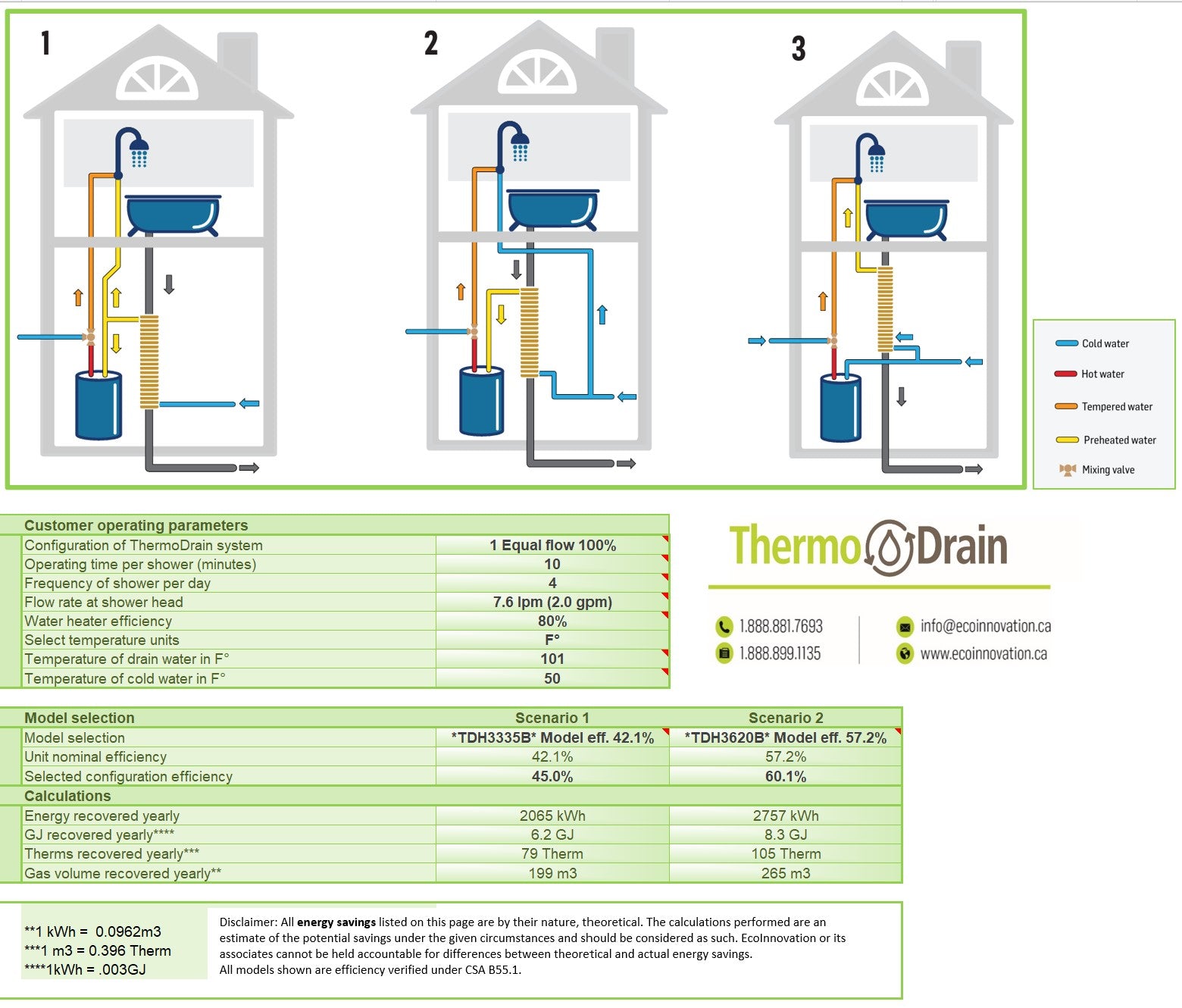
It turns out, hot water doesn't just vanish when it goes down the shower drain—it takes about 80% to 90% of the energy you paid for right down with it. That copper unit doesn’t use electricity; it uses basic physics. As gallons of hot water swirl down the inside of the drain pipe, the cold city water coming into the house wraps tightly around the outside of it on its way back up.
By the time that fresh water reaches the shower mixing valve and the water heater, it isn't icy 45°F water anymore—it's already preheated to around 75°F or 80°F just from the heat of the water leaving the tub.
Because the incoming water is already warm, your shower fixture needs a fraction of the hot water from the tank to hit the right temperature. In plain English: our existing tank effectively acts like it's two to three times larger during simultaneous showers. As long as someone is showering, the system is actively recharging the thermal load in real time.
It’s been eight months. We haven't run out of hot water once. No timers. No yelling up the stairs. No strategic shower shifts.
When people visit and ask about the new house, they usually want to see the kitchen island or the patio. But if you catch me by the stairs, I’ll probably drag you down to the basement to show you a four-foot vertical copper pipe. It’s the single most unglamorous, silent piece of equipment in the entire house—and easily the best thing the builder ever put in.









No comment yet, add your voice below!